Fri 2 & Sat 3 Oct 2026
Stroud, Gloucestershire
2026 Contributors
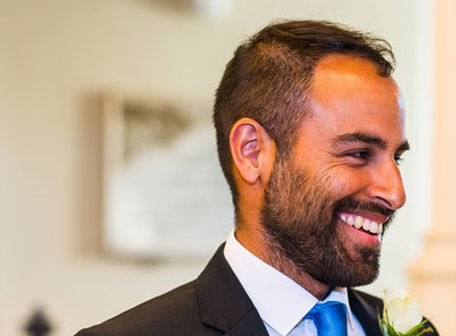
Paul Kahawatte,
Navigate
Paul Kahawatte is a highly experienced mediator, facilitator and trainer. He focuses on supporting people to work through conflict and disagreement, and collaborate well together. He works in progressive social movements, communities and in the field of participatory democracy.
Paul is a co-director of Navigate, a workers cooperative that supports groups and individuals to build capacity in facilitation, leadership and mediation. Together they guide groups to consider how to create 'living systems', including ways to make decisions, engage with conflict, and organise support.

East Marsh United
East Marsh United is a grassroots community group working in the East Marsh of Grimsby, tackling systemic poverty and deprivation via a vibrant programme of developing housing, greening, retrofit and creativity. We are person-centred and collaborative and we are looking to the future by acting as Good Ancestors and building foundations for the community for generations to come. We are stewards and custodians holding a growing number of assets in perpetuity for the community. We are committed to a fairer and kinder future where people can thrive rather than just survive.

The Humanity Project
In 2023, after a year of conversations, Humanity Project’s three convenors, Clare, Lee and Nick, knew they needed to join the dots between their communities working to end racism, take action on climate, and tackle the cost of living crisis.
Listening to stories from their communities, they heard what many of us know: that politics often feels done to us, not with us, and that many people feel cut off from decision-making by a system that too often serves the vested interests of the few.
“We asked ourselves: What would happen if the whole nation listened to itself, away from the media? If we came together across the country in our streets and neighbourhoods to hear what others had to say?”
Together, they knew their role was this: to help create new ways for people to listen to one another, connect across difference, participate in decisions that affect them, and discover their shared power to act.
What emerged from these conversations, and the work of many others since, is assembly culture.
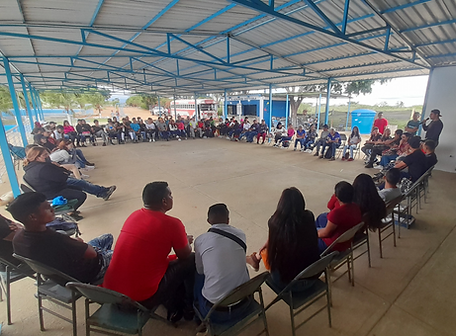
Cecosesola Cooperative
Integration Organisation
Cecosesola is a network of community organisations from low-income areas that produces and delivers affordable goods and services to more than 100,000 families across seven Venezuelan states.
Guided by an ongoing process of cultural transformation, the network has grown significantly over the past fifty-five years to include cooperative funeral services, food markets, a health network, savings and loan services, agricultural production and small-scale processing facilities. Cecosesola’s activities are largely self-financed and consistently offered at prices far below conventional retail levels.
The organisation serves as an inspiring example for those seeking alternatives to traditional hierarchical economic models found in both private and state institutions. It places learning at its core, encouraging collective reflection on workplace relationships and broader social dynamics, grounded in transparency, mutual support and equity.
Over time, Cecosesola has continually adapted its practices to respond to Venezuela’s evolving challenges, including food shortages, hyperinflation, migration and recurring financial crises. Today, it operates through a flat structure where all voices carry equal weight and decisions are made collectively. This approach strengthens community resilience while fostering trust and shared responsibility, enabling members to sustain essential services despite economic instability and ongoing social uncertainty across the region today. uncertainty across the region today.
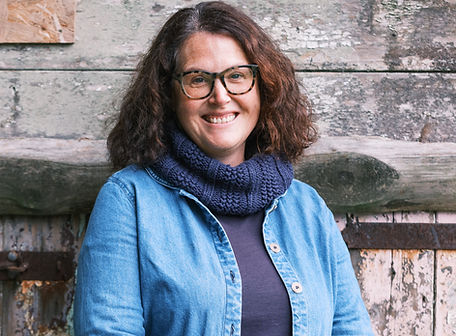
Rachael Forster,
Tamar Grow Local
& Landmatch England
Rachael Forster is the Central Coordinator for Landmatch England, working with a dedicated team to connect landseekers and landholders, build partnerships, and open up land for new food and farming enterprises. She also works on a number of collaborative projects with Tamar Grow Local CIC around access to land and routes to market, including managing Mill Lane Acres (Tamar Grow Local’s Farmstart for new entrants into horticulture) and co-developing Tamar Valley Food Hubs, a not-for-profit online farmers’ market.
Tamar Valley Food Hubs was started as part of the Cordiale project's Tamar Valley 'field trials' aimed at re-establishing local supply chains between producers and consumers. The aim of the Food Hubs was to promote and encourage increased availability of sustainable and affordable local produce in the Tamar Valley and surrounding areas, including Tavistock and Plymouth, and to spread awareness of the many benefits attached to the production, preparation and consumption of local food.

Lee Robb,
Positive Carrickfergus
Lee is from Carrickfergus in Northern Ireland and is exploring how to reconnect with and fall in love with her hometown through practical, community-led change.
In 2017 she founded Positive Carrickfergus, which has since become a Community Interest Company focused on community-led regeneration. The initiative brings residents together to respond to the decline of the town centre and to step into collective leadership for positive local change. A current priority is taking over the management of Carrickfergus Town Hall and transforming it into a community arts centre.
Lee also co-founded Carrick Greengrocers, a member-owned cooperative that has been trading since 2023. Through this work she has become active in the agroecology movement in Northern Ireland, contributing to food policy discussions and demonstrating place-based, community-led approaches to transforming local food systems and local economies.
In addition, Lee is the co-founder of Repair Café Belfast and Repair Café NI, supporting twelve communities across Northern Ireland to establish their own repair cafés—spaces that promote skill-sharing, resourcefulness, and stronger community connections.

Jaqui Smith and Lou Shamrock,
Paganhill Community Group
Jaqui Smith has lived in Paganhill, Stroud, for nine years and, after retiring, became committed to supporting the community by starting with people's strengths rather than their needs. In 2017, she helped establish Paganhill Community Group to build on the area's strong neighbourliness and create opportunities for connection, learning and mutual support. Based at The Octagon, a former Baptist church, the group now runs activities including community lunches, a Food Hub, bingo and arts and crafts. Jaqui is now leading efforts to secure the building's future through community fundraising, ensuring it remains a permanent home for local people.
Lou Shadrack started working at the Octagon in June 2025, but has been volunteering there since she left treatment in 2023. Since then she has been deeply involved in developing the community offerings, focusing particularly on sustainable projects and local engagement. She is passionate about ensuring The Octagon remains a vibrant, welcoming hub for everyone in Paganhill no matter what struggles they may be facing.

Dave Darby,
Stroud Commons
Dave Darby is a writer, organiser and long-time explorer of alternatives to mainstream economics. He travelled around intentional communities in 20 countries before spending 15 years living in one in southern England, grounding his ideas in lived experience.
In the 1990s he worked on ‘development’ projects in Romania, and in 2001 he founded Lowimpact.org, a practical resource for low-impact living that’s now evolving into a knowledge commons under the banner ‘Growing the Commons’.
In the 2010s Dave became active in the mutual credit and commons movements. In 2017 he began working with Dil Green at Mutual Credit Services to develop the Open Credit Network, launched in 2019 as a national mutual credit network for the UK. This experience made it clear that mutual credit and commons projects need to be rooted in communities and federated to reach national scale. To that end, Dil launched Local Loop Merseyside, and Dave brought commons ideas such as ‘use-credit obligations’ to Stroud, helping to launch Stroud Commons and Stroud Housing Commons.
He’s currently writing The Commoners' Manifesto: Neither Capitalism nor Communism, a provocative call to build a commons-based economy from the ground up, rather than via the state.

Flick Monk,
Platform
Flick Monk is a community and public energy campaigner at Platform, working towards a Scottish energy system that puts communities front and centre by pushing for community and shared ownership of our energy system.
Based in Argyll, she previously worked at Friends of the Earth Scotland on fracking and divestment. She has an MSc in Environmental Studies from Antioch University New England where she researched community energy.

Maff Potts,
Camerados
Maff went from having his own challenges with mental health and homelessness to running the largest homeless provider in the UK. He has spent three decades working in social justice with a varied career that included turning the Millennium Dome into a homeless shelter; working as a government advisor and running a capital programme that built a new generation of homeless centres in England; the CEO of a national charity working across domestic violence and addiction; a housing association working with prolific offenders; and he also set up “Power to Change” which ploughed £150 million into the community business sector.
Maff left traditional forms of social change in 2015 when he set up the social movement Camerados in his bedroom. This is now in over 300 neighbourhoods in 6 countries worldwide.
Camerados are people who believe that the answer to our problems is each other and they can be found setting up Public Living Rooms, places where people going through tough times can get together and have a bit of company, with no outcomes needed and permission to just be a bit rubbish, together. People pop them up in libraries, parks, community centres, hospitals wherever the community can find space and a sofa or two.

Common Soil Community Farm
Common Soil is a community farm, also known as a community supported agriculture (CSA) project.
"We are a group of local people who grow food together, supported by the wider local community – some of us are paid for our work, some of us volunteer regularly, some get involved when they can, some come to celebrate with us, some offer their support by buying the produce, some are neighbours who jump in to help when six tonnes of compost is delivered!
The point is that none of us could do it alone. The farm is carried through the year by the wider community. All those who buy veg boxes are members of the farm and share times of abundance and still offer support in leaner times."

Ruth Ben Tovim
Ruth Ben-Tovim is a community artist and facilitator with over 30 years’ experience working creatively across sectors and contexts.
From 2003–2020 she was Director of Encounters Arts, midwifing more than 90 creative and participatory projects across the UK that invited thousands of people from different backgrounds to explore their experiences of the past, responses to the present, and hopes and fears for the future. Work included being part of the team representing the UK at the Venice Biennale of Architecture, projects for Liverpool Capital of Culture and their year of the Environment and the RSA Art and Social change programme.
Ruth held local and national roles in Extinction Rebellion and she was one of the co-founders of Culture Declares Emergency. She is currently a director of Walking Forest a ten year project combining women, trees and activism and she is a director and facilitator of Town Anywhere : Rehearsing the Future. This day long community visioning process initially commissioned by the Transition Town Network, brings people together to imagine and then build a Thrutopia version of how the place they share and their role within it could flourish and develop at a time when the future can feel so uncertain.

The Heavens Valley
The Heavens Valley, nestling on the edge of Stroud, has long been a cherished haven for individuals, families, and friends. It is 102 acres of historic and bio-diverse land, including streams, meadows and ancient woodlands.
In 2023, following news of its proposed sale, the community launched a campaign to buy it for themselves. After a year of fundraising, including donations, share purchases and two loans from local residents, they raised enough money to bring it into common ownership, making it one of the largest single community purchases in England.
In 2025, a generous grant from the Summerfield Charitable Trust meant that the loans were repaid and the land is now secured, to be enjoyed and cared for by the people of Stroud forever.
Work is now underway to understand both the needs of the land itself, and the community around it, creating a plan for managing the Heavens Valley together for future generations.

Jess Farr,
Stroud Area Community Energy Networ
Jess is a community energy and climate action specialist with over 15 years' experience in the voluntary and community sector. She has a track record of developing and supporting community-led climate action projects, by securing funding, building partnerships and strengthening organisations to help deliver lasting local impact. As Coordinator for Transition Stroud for the past 4 years, she has played a key role in establishing the Stroud Area Community Energy Network (SACEN) and supporting the growth of community-owned clean energy projects across the region. She is committed to building resilient, low-carbon communities through collaboration, participation and local ownership.


Iris Partridge,
ResNet
Resilience Network CIC (ResNet) works with local communities on increasing the overall climate resilience of underserved neighbourhoods. We see climate resilience in two ways: direct, mainly weather related consequences and indirect, mainly financial impacts of climate change.
ResNet is developing a community owned, domestic rooftop solar PV and battery scheme called The Solar Challenge. It addresses direct and indirect impacts of climate change: keeping money within neighbourhoods and increasing local energy resilience.
.jpeg)
Stroud Commons
Climbing Wall
A group of people in Stroud got together in late 2022 to see if they could apply new ideas being developed for commoning to build a climbing gym in Stroud at an affordable price and make it replicable in other towns.
Thousands of volunteer hours have been poured into this project. It turns out, building a climbing wall was much much harder than initially imagined. But they’ve done it! And we’re planning to open our doors to the public this summer!

The Long Table
"What if everyone in our community had access to great food and people to eat it with?” This is the big question the Long Table is here to answer.
The Long Table runs two community restaurants in Brimscombe and Cirencester all about radical hospitality.
"Every hot meal served is pay-as-you-can, so our food is accessible to everyone, regardless of means. It’s not about charity – it's about dignity, equality, and a community supporting neighbours who need a little help.
It's about creating a space where everyone is welcome to feast, talk, laugh, and find a place."
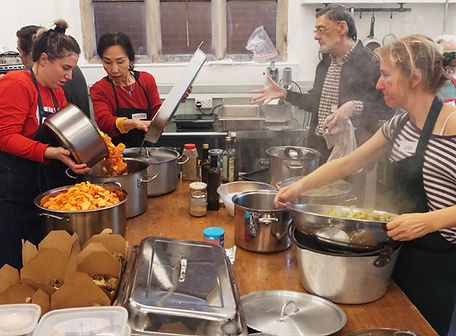
The Trinity Rooms
The Trinity Rooms is a community food, health and eco hub in Stroud. It's run by the Stroud Earth Community Charity with a small number of paid staff, a board of trustees and many volunteers.
They run a twice weekly Community Pantry, a weekly Community Cafe, a monthly Repair Cafe, and a weekly Youth Club.
They also host the Rethink mental health cafe, Stroud Against Racism, the Food Bank, 5 Valleys Seed Savers, poetry and art classes, dancing, singing, yoga, qi gong, public and private meetings, and celebrations of all kinds.
Trinity Rooms aims to help everyone feel welcome, especially those facing challenges in their lives.

Sophie Winter
Sophie is a singer, conductor and theatre maker interested in the power of collective creativity to connect people and amplify unheard voices. Through her choir Some Voices, vocal collective The Caw and her theatre practice, she creates spaces for shared creativity and new perspectives, exploring how music and performance can connect us and build community.
Periscope
Periscope create immersive, participatory creative events. These events are open access, free and for all ages. The events explore our local community, sense of place, history and heritage, whilst drawing out imaginative ideas for our community’s future. Periscope spaces are both art workshop, art installation and learning environment; spaces for co-creation and collective reimagining for all ages; and are carefully designed to be accessible and non-hierarchical..

OICD
OICD is a not-for-profit organization working to bridge academic research and practice. We provide our expertise to conflict transformation, community building, social work, education, and other social good and justice sectors where understanding identity is critical in resolving deep-rooted problems.The OICD is independently funded and non-partisan.
"At OICD, we challenge harmful tribalism and view humanity as a result of great collective imagination and cooperation. We believe 'us' versus 'them' divisions at the root causes of persecution, discrimination, inequality, violence, and climate change are preventable and reversible."